Friday, 13 October 2017

BEAUTY NEGLECT AND DECAY.

NEGLECT AND DECAY 
-Neglect and Decay was the original title for my project, as I was intrigued by the book "Beauty in Neglect and Decay", where old, abandoned houses and buildings over the world are documented in a photography diary. As something my parents would label 'ugly' or 'disgusting', I wondered how these Photographers were warping the 'parental truth' in order to find the 'beauty' in neglect and decay. I decided that it was their own, personal outlook on the situation, and decided to try and find beauty in otherwise 'ugly' or 'neglected' things.* 
As Human Beings, we have basic requirements and needs, as described in Maslow's Heirarchy Of Needs: 
1. Biological and Physiological needs - air, food, drink, shelter, warmth, sex, sleep, etc. 
2. Safety needs - protection from elements, security, order, law, stability, etc. 
3. Love and belongingness needs - friendship, intimacy, affection and love, - from work group, family, friends, romantic relationships. 
4. Esteem needs - self-esteem, achievement, mastery, independence, status, dominance, prestige, managerial responsibility, etc. 
5. Cognitive needs - knowledge, meaning, etc. 
6. Aesthetic needs - appreciation and search for beauty, balance, form, etc. 
7. Self-Actualization needs - realizing personal potential, self-fulfillment, seeking personal growth and peak experiences. 
8. Transcendence needs - helping others to achieve self actualization.  [1] 
But, as we have evolved, and seemingly in the western world, the ease at which we can acquire these has increased, and the needs for different levels of the system can be combined. For example, one could combine 2 and 5, by studying Law at University.  
In my studies, I have chosen to look at a form of art that fulfills multiple levels in the Hierarchy. It provides Shelter, Safety, (in protection from elements), and fulfills some Aesthetic needs. But apparently only for some people, due to varying opinions as to whether Brutalist Architecture actually provides Beauty and fulfils the Aesthetic requirement. 
Brutalism is the government response to a Second World War ravaged country. "Communities sought inexpensive construction and design methods for low-cost housing, shopping centers, and government buildings"[2], and Architects responded with raw, uncompromising structures that utilised the scarce amount of materials available at the time. 
*For example a piece of black mount board with a clay-dust induced footprint on it could be made pleasing to my own eye with the careful use of a paint pen. 
I then started looking at how these patterns could be used to my advantage in creating pieces that looked good. I carefully considered my use of materials to parallel with the subject matter concerned. I began working with and onto wood. The first examples of this are where I used some MDF board, recycled from office/warehouse interior, onto which I painted a derelict, unused, commercial building (which has now been demolished). Although focusing heavily on the detail and precision associated with the work, I didn't behave too carefully around the wood, as I wanted to hold onto the 'neglect and decay' starting point I had found.  
In a similar way to which the original patterns had been produced- accidentally- I had left the water pot for my paint resting on the wood. It produced a fuzzy, predictable yet undefined and fuzzy watermark on the work- Just as an office worker would leave their tea cup on a desk. I dabbed away the excess water with a paper towel, and quickly traced the outline of the new-found 'pattern' with my paint pen. Of course, after the first few watermarks, these were no longer accidental, but instead I was embracing the pattern that evolved on the work. 
*picture of long board* 
In wanting to explore this further, I began searching for patterns that accumulated accidentally in my environment. I came across some cracked plastic on a bin label, and decided to combine this with a drawing of some houses on one of the pieces of board I had 
*picture of bin pattern* *picture of houses in Gosport* *picture of black mount board blue/white* 
I then began working on more of these little pieces, concerning myself with how to increase the skill level associated with them, which eventually resulted in me looking at artists that create deliberate patterns. I found Japanese Artist, Yayoi Kusama, who embraces pattern in the environment, covering objects, herself, and the surrounding area (in this case a room) in captivating patterns. This is a simple idea that creates a lasting impact on a viewer, and I continued to look through Kusama's work until I found her 'infinity net', a concept where a shape tessellates continuously over a page. Although a two-dimensional drawing, on mass they culminate to give a sense of depth, and as the name suggests, a sense of infinity. 
To the artist, these nets were and still are "visualisations of hallucinations that have recurred since her childhood" [3] However, I read that she would sit, and relentlessly paint them until they were finished. Hence, to me, the patterns became very much about the process and the construction of them.  
ImageImageImage 
I began drawing my own nets, and decided that I liked the triangle ones best, as they connected in the easiest way, and like the brutalist buildings, were the most economically sensible to continue with. I found an artist that calls herself Marenbruin, and she draws these triangles onto pages in a carefully considered manner, making the viewer question what they are looking at. To me, the works look delicate, yet futuristic- a complete contrast to the heavily metallic dystopian futures we are all subject to. 
Original pen drawing / Everything is connected  / line drawing / pink / illustration / 8,5 x 11inch 
 I began drawing my own versions of this, and discovered the varying of the size of the triangles could result in an interesting piece. However, these are highly time consuming, and require little skill, and so I set about painting a silk screen with the tessellating pattern on, in order that it was reproducible. 

While the prints were drying, I began to work on the initial ideas around buildings again, producing a pencil study of The National Theatre building, photographing some Brutalist tower blocks close to my home, and visiting the Barbican for further photographs. I learned that cheap Graphite pencils are perfect to draw the concrete structures, as they are arguably the rawest material an artist can use to produce images. 
Whilst at the Barbican, I found a postcard designed by Margaux Soland that resembled my own work, and when researching further found Holly Would, who produces some similarly- orientated collages. The nature of these buildings seems to lend itself to collage, and I experimented with my own ones. 

My own collages were done on painted acrylic backgrounds, always with intentions of being able to draw patterns onto them too, but this wouldn't always work.

From this, I could try and combine my interest in Brutalism with the patterns onto the black mount board.  
somewhere along the line came buildings 
then brutalism 
then combining patterns and buildings to compliment each other 
[1]http://www.simplypsychology.org/maslow.html 
[3] http://www.victoria-miro.com/exhibitions/444/ 

GIACOMETTI: PURE PRESENCE (The point of man in a pointless universe)

It felt like a very dark place in that gallery space. Spotlights were used to draw attention to the sculptures that are made from clay and then cast in a deep-brown bronze. A video played with accompanying music that sounded like it was from a horror film. Especially when paired with portraits like the one below. Giacometti refused to clear the dust from the windows in his studio, resulting in these horrifically coloured portraits, where the subject looks absent and haunting.


All of the sculptures had really harsh features, and I could relate to the notion of the sitter's features being ingrained into the artist's mind. "Repetition. Repetition. Repetition." It's what happens when you sit and look at something for long enough and draw or sculpt it. You can feel the lines and curves with your own hands and mimic them with a crazy kind of likeness. Yet, at the same time, you can't mimic them at all. Giacometti spoke of this saying something like the face looks incredibly flat from a straight-on perspective, then from the sides it's wonderfully rounded. He explained that it's somewhat impossible to capture this perfectly in sculpture. Maybe his frustration explains why his method is so repetitive and frantic.

The men in his sculptures are always acting, moving, working although in their still form while the women stand still. To me, this says that the Giacometti can connect with men; can see their purpose, and accepts that they are designed to work. He feels detached from women, like they are delicate, fragile, there to be observed and touched. I didn't want to interact with any of the 'moving' sculptures, yet felt myself wanting to touch and admire the still figures.


Existentialism was a theme that existed in the exhibition. What is the point of man in a seemingly pointless universe? Samuel Beckett had a similar problem to tackle in his plays Waiting For Godot, and Endgame. He creates a satire around man waiting for something that never arrives. Maybe this idea provides ground for why Giacometti applied himself to sculpture as well as painting. This way his work is tangible as well as completely viewable; if you create substance you have served your purpose to the world and your existence. By changing your surroundings you have left a mark for the people that follow and this is the most exciting thing man can do: evolve.

SHOW UP TO THINGS

A lot of people didn't show up. A lot of people don't show up. A lot of people will never show up.


I want to be the person that shows up, I want to be the person that's reliable, and I haven't been able to be that lately. I think it's because I've been putting other people first for far too long. I've been being what everyone else wants to be instead of what I am and what I want to be.

I want to be a creative genius, unmatchable on all levels. I want to be able to see things that other people can't, because the creative space is an extension to my body, and I know it better than anyone else.

I used to be in a position where I could have an (out of body experience) in relation to my work. I used to be able to view it bird's-eye style and know how well it functioned as a piece, or would hold up in exhibition without having to guess, or worry about it. Perhaps I have gained experience or knowledge that allows me to see the flaws in my work. Perhaps I've adapted a negative insight into things that means I cannot appreciate them as much as I used to. However, I cannot explore as freely or as diligently as I was once able to; I've hit a wall and need to find a way to climb over it. Perhaps I need to go back a few steps to pick up the ladder I left behind somewhere.

The internet was only invented about fifteen years ago. It was an idea pioneered to allow scientists to transmit data instantaneously across the world; experiments were not duplicated but added to and improved on. Results could be shared and checked across continents. It was revolutionary.

Now the internet is used for the likes of social media and pointlessness. People spend more time online than the do in reality. (she says, writing a blog post).

People are so concerned with how to work within the system(relatable to the number of followers, for example) that they forget what exists outside of the system(making themselves valuable on physical and intellectual merits rather than media merits).

I've never known what I wanted and I don't think I will for a long time. However I need to stop making the people around me happy and focus on myself.

In the physical world, I can't keep up with current affairs. I've never left the country by myself. I can't manage my money. I know exactly how and what I should consume, but I never seem to be able to bring myself to consume it.

Writing this has made me realise that I don't know a lot. I don't know why I live the way I live.

I'm far too comfortable in my house, In my room, surrounded by my things.

So comfortable in fact, that I'm a little restless and stir crazy and ready to run out of the country as soon as I can and begin a life where I don't have to wake up in the same bed every day bar the two week holiday I get in the summer...


This post was written in December 2016 and never published... Looking back at it I'm glad I didn't, but it's a great reflection piece in hindsight.

Sunday, 22 March 2015

WHICH FOUNDATION COURSE?!

So, I'm at a point in my life where I have to decide which university I want to go to next year to do a Foundation Diploma in Art and Design. I have a total of a week and two days in which to do this.

 As you may (or may not be) aware, foundation courses for Art and Design don't use the standardised system for university application that is UCAS (Universities and Colleges Admissions Services), but in order to apply for these courses, there are a series of hurdles one has to jump over.

Step 1: Establish the course exists.
I decided that I was going to apply for Art and Design on the day that people were filling in standard UCAS applications. This posed a problem for me as it was already October, I thought I would have to apply for degree couses, and I had no portfolio, no experience, and no clue in general.

After several hours on the Internet I found out about UAL, UCA, Kingston, and other places that were reputable for their Art and Design courses. 

I then discovered this so called "foundation".

Step 2: Realise that the course is free.
I was practically cheering! The foundation course is considered further education rather than higher education, which means there is of course no fee  (as long as you're under 19) (and this excludes material costs, which comes in at around £250 for the year, depending on where you go. -Plus personal supplies of course, which you can budget-manage as you please). But, with no fee comes **NO STUDENT LOAN**. This means that while there is no tuition cost, there is also no money to put you up in digs... 
...unless you've robbed a bank in your not-so-distant-past.

Step 3: Choose where to apply.

Now, I know this one sounds simple. However there are loads of places to choose from- all depending on where you live in the UK (or abroad for that matter).

Personally,I think being so close to Heathrow makes me super lucky.
I'm within an hour and a half of UAL's CSM, two hours of Camberwell, an hour's drive from UCA's Farnham, and around half of that from Kingston's Campus.

All in all, I have the best facilities for these courses on my doorstep, so can live at home while I work my butt off next year.

Step 4: Open Days, Portfolio and Applications.
Now, I've put these three all under the same heading because I'm not entirely sure which one came first.

It all kind of happened at once.

As the applications for these courses are usually due in towards the end of January, I recall the open days happening in October/November time... but can't remember too well. The trick is to check the university/college websites from August through 'till application deadline day so that you're as informed as you can possibly be. Things change all the time.

For me, the Christmas Holidays were a lifesaver- they allowed me to finish putting my portfolio together and work on my applications. The most frustrating part of the process was having to input my details, plus 10+ GCSEs and 3 A-Levels into every application portal. 

I figured applying to 5 or 6 courses in total stood me in good stead for some interviews and offers, and I ended up applying to:

1. Uxbridge College
2. East Berkshire College, Windsor
3. Fareham College, (In the Portsmouth direction)
4. University for the Creative Arts, Farnham Campus
5.Kingston University, Knights Park Campus
5. University of the Arts London, Central Saint Martins

And I ended up carrying my A1, white sheet, intensely worked portfolio to each of these for an interview.

*cheers*

Top Tip:

Buy one that:
  • Doesn't need plastic wallets and holds your work nicely under a strap or something.
  • Has a nifty handle half way down so you can hold it under your arm
  • Is economically good value- in the middle of your price range, and will last for as many years of Art and Design education that you plan on engaging in until you have a paying job that buys you a new one.
I paid £35 for a Portfolio and £40 for 15 plastic wallets, but this is not something I I will be doing again. The Portfolio itself is ok looking, but the binders open with any significant weight placed on them. But the wallets weigh so much with work in that it's impossible to compromise with this, and my work fell out about four times before I just gave up putting it back over the binders. 

Or you could simply do what one of the girls at an interview I was at did, and put your work in a cardboard tie-up folio, no plastic required, and sew yourself an amazing folio-holding-bag-situation that's ten times better than anything on the market and looks amazing. (Her one was green with white stripes and black handles and made me totally jealous).

Step 5: Interviews
Arguably, this was the most interesting and fun part of the process. I got interviewed by Farnham and Kingston in a group situation, and had to drop my portfolio off at CSM. 

However, my first interview was at Uxbridge, and was incredibly entertaining.
I got there, was called into a room, then another room, then down a corridor into a third room for the "level 3 diploma interview" I was expecting, to be told that the course I had applied for and my letter stated I had been invited to an interview for didn't exist and wouldn't be running in September.

Gee, thanks everyone.

Next up was Farnham, a beautiful town and campus- and based on location would totally be the place of my choice to go to. It was a group interview with 6-8 of us sat around a table chatting about art work. We selected our favourite piece, and had to talk the group through it bearing in mind intentions, technique, use of media, overall image/viewer impact and so on. This was a good experience, as we got to look at each other's work, and I gained an insight to the "competition" with regards to a place. I believe there are 300 places on their course, but from my understanding Farnham will "make room" for anyone that applies there- as I was told on an open day.

Interview #3 was at Fareham, lovely, polite, 1:1 interview where I was assured I would be in good hands in the new facilities (that were still under construction).
With a small course of 30 this place would be a nice, stress-free working environment.

Interview #4 was at East Berkshire, Windsor. But by this point, I'd rescheduled the interview three times because they kept giving me too little notice- It was always a Wednesday, 3.45pm. The letter would always arrive the Friday before. As I work on a Wednesday night at a place with few staff I couldn't get the time off, as I couldn't anticipate what week the letter would come. Long story short I eventually told them I couldn't make it to their interview(s), and gave up trying to apply there.

Interview #5 was a portfolio drop at CSM, so not strictly an "interview". I didn't feel this experience was highly personal, and was all in all quite intimidating. The Granary Building is HUGE, and super plush with security that doesn't let my mother in when I'm inside... waving at the security man... with my visitor badge... telling him she's my mother...
*sigh*
Anyhow, in the room with the (60?) other candidates for the Diagnostic option, where we all fought to place our heavy portfolios on tables my name was called and I had to collect a piece of paper with my name, details, and "marksheet" on it.
It seemed that I was to be marked out of 10 against a number of criteria, and my offer would depend on whether or not the person reviewing my work checked the box marked "Offer: Yes" as opposed to "Offer: No" right at the bottom.

eek.

I spent 10am-4:30pm wandering the likes of the Lazarides Gallery and the Shops on Oxford Street to distract myself from the harsh criticisms I felt my work would be receiving.

Interview #6 was the last, and most enjoyable interview I had. It was at Kingston, and was again a group interview. It was 10am-11:30am, 12 people in a room, portfolios open, and a 5 minute interrogation into each candidate's motives, work and personal life- and ultimately "Why Kingston?".
We were told they had 1500+ applications, 400 people in for interviews, and were going to select <200 of them for a place.

Uh Oh.

Step 6: Offers- and what I'm currently struggling with, accepting them.

Honestly, at the open day stage, I never thought I would have my portfolio ready, let alone get interviews anywhere, or in fact OFFERS.

But oh my, this is both the best and the worst situation I can be in...

I've received offers from Farnham, Kingston and CSM- all against what I thought would happen. I honestly thought I would struggle to get anywhere.

I've got until the 31st of March to decide where to go/which offers to accept/decline.

I've got mixed thoughts about all of the places:

Farnham has the best facilities/little town/location for access for me personally.

Kingston has an amazing reputation and course leader (she's the only leader I actually met), I know I'll be pushed and challenged with the intensive course structure they have.

CSM... well it's UAL, said to be the best location for Art and Design in the UK. I would meet great people and have a great start... but I don't know how well I'll cope if everything is as impersonal as the portfolio drop.


So please, if you have any questions or advice on what I've written, or anything above has helped you out let me know. 

I'm happy to hear your comments.


-All for you.


Thursday, 1 January 2015

THE HIPSTER LIFE #1: CHOKERS

Don't know how this happened but it did.


Over Christmas I've managed to accumulate an amazing amount of so called "hipster" items.


When paired with the things I already had, there's quite a few things. I'll make a list.


#1 - CHOKERS


Exhibit A: 


Moon&Stars Handmade Choker.


Displaying photo 5.JPG
I bought this one about four/five years ago with my Mum. One of her old friends makes jewellery and was holding a small sale, and my Mum took me along and offered to buy me one of the pieces (as Lucia, the lady selling the Jewellery was doing 'buy two get one free' kind of deal, so my one was free.). I fell in love with it immediately, as it's mystical, yet kind of elegant, and doesn't really suggest anything sinister like some chokers do. It's my most worn and favourite piece of jewellery to this day.


The next one is something I've had since I was a kiddie. I don't even remember buying it. And admittedly yes, it does remind me of Barbie because it's pink and glittery, and I can imagine it looks kind of babyish... but at the end of the day it's a charm on a black cord and can be labelled 'retro' so hold me back.


Displaying photo 5.JPG


Next up, I suppose are the newly-acquired-christmas-chokers that I put on my list :).


There's two of these; the first is the crystal choker that I had to bodge to 'fix', because it was ordered online and the cord was too small (12" when I need 16"). Apart from that, I like the charm, it seems fairly robust and the colours are reasonably true to the photo. (I have the fluorite one that's on the right)- it looks fairly dark inside, but I'm sure the sun will light it up nicely!

Image of Point Pendant Cord Choker


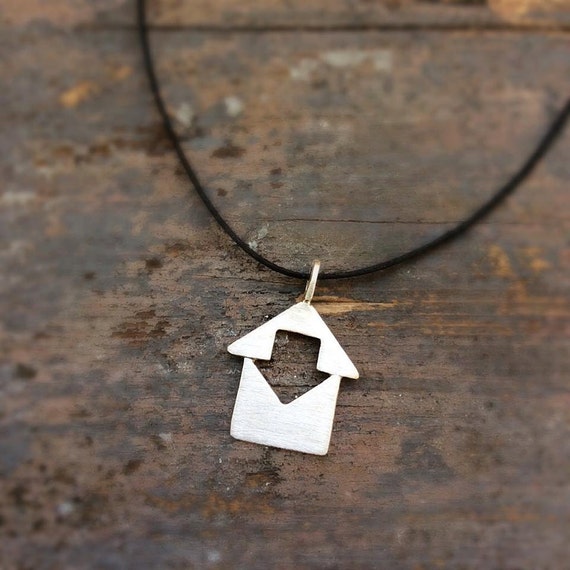
And secondly my Radiohead "Down is the new up" Handmade choker on Etsy. [[link]]
radiohead necklace, simple silver necklace, adjustable necklace, minimalist necklace, dainty handmade necklace


I love them all, and acquiring unique, highly personal jewellery is just awesome.


-All for you.